How to Make DIY Toys at Home for Kids Without Spending Much | Motorized Wooden Jeep
Aug 09, 2026


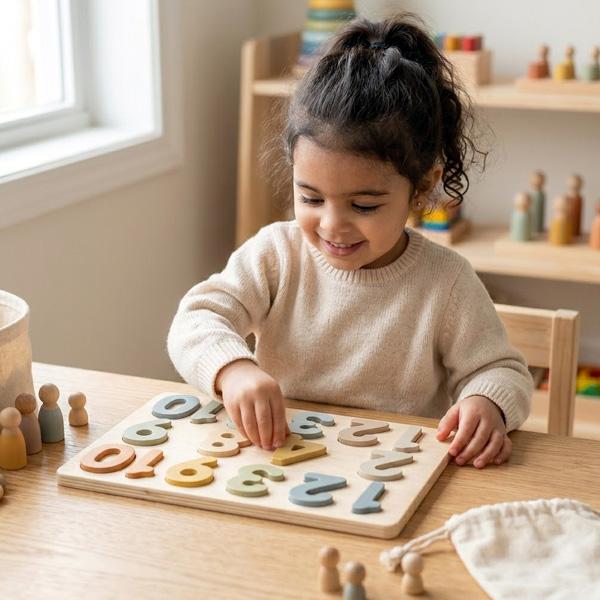
The age of three is one of the most exciting stages in a child’s development. At this age, children are naturally curious, highly active, emotionally expressive, and eager to explore the world around them. Their brains are rapidly developing, and every play experience becomes an opportunity for learning.
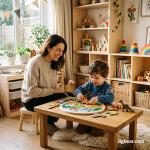
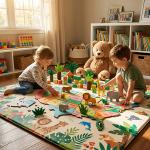
This is why many parents, teachers, and Montessori educators carefully choose toys that support healthy child development rather than simply providing entertainment. Montessori educational toys are specifically designed to encourage independent learning, creativity, problem-solving, concentration, and hands-on exploration.
Unlike noisy plastic toys filled with flashing lights and batteries, Montessori toys focus on purposeful play. They allow children to learn through movement, touch, imagination, and discovery.
we believe that children learn best when they actively engage with natural materials and meaningful educational experiences. Handmade wooden puzzles, alphabet toys, map puzzles, sensory learning tools, and animal puzzles help children build essential life skills while enjoying screen-free play.
In this complete guide, we will explore the best Montessori toys for 3-year-olds and explain how they support learning, creativity, emotional growth, and cognitive development.
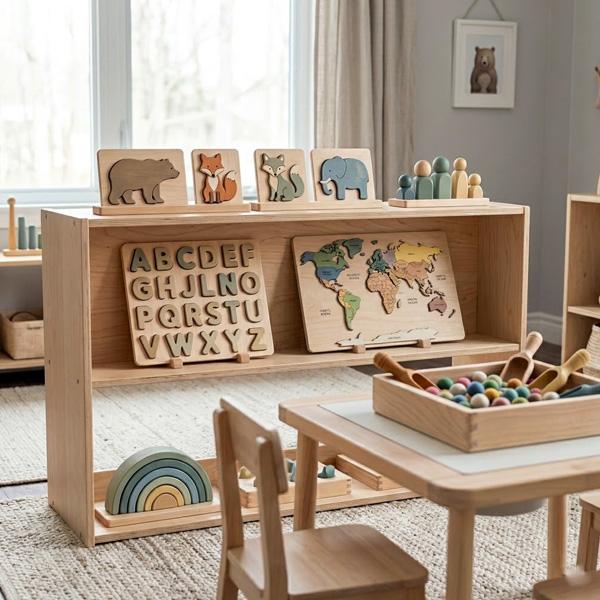
Montessori toys are different from traditional toys because they are intentionally designed to support child-led learning. A Montessori toy encourages children to think independently rather than relying on automatic sounds, screens, or electronic stimulation.
A good Montessori educational toy usually has these characteristics:
Made from natural materials like wood
Simple and purposeful design
Encourages hands-on learning
Supports problem-solving skills
Promotes concentration
Helps build independence
Open-ended play opportunities
Safe and durable construction
Montessori toys are carefully aligned with child development stages. For 3-year-olds, the best toys support language development, fine motor skills, creativity, emotional intelligence, and early academic learning.
Educational experts often recommend Montessori toys because they help children stay actively engaged in meaningful learning experiences instead of becoming passive consumers of entertainment.
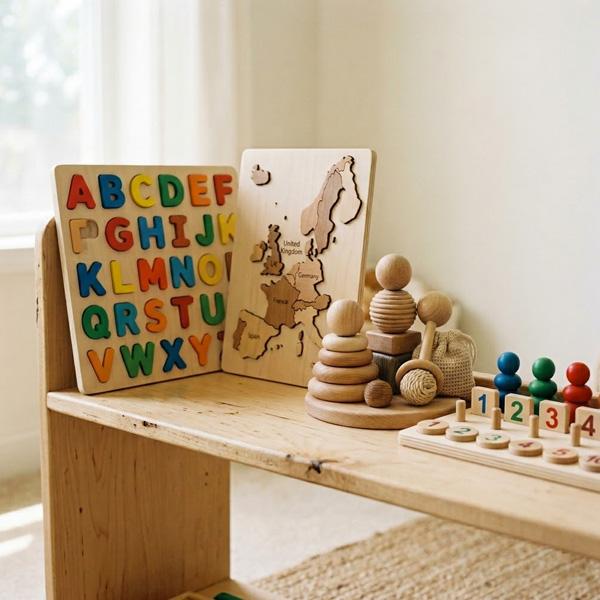
Wooden puzzles are among the best Montessori educational toys for toddlers and preschoolers. They help children develop concentration, patience, logical thinking, hand-eye coordination, and problem-solving skills.
At age three, children enjoy puzzles that challenge them while still being achievable. Montessori wooden puzzles provide the perfect balance between fun and learning.
Wooden puzzles help children improve:
Fine motor skills
Shape recognition
Memory skills
Cognitive development
Visual perception
Focus and concentration
Children also develop emotional resilience as they learn to solve challenges independently.
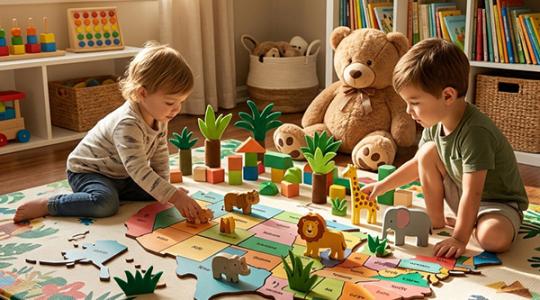
Animal puzzles introduce children to wildlife, farm animals, sea creatures, and jungle animals while supporting language development and storytelling.
Alphabet puzzles help children recognize letters and build early reading readiness.
Map puzzles introduce geography and spatial awareness while teaching children about countries, continents, and cultures.
Number puzzles help children understand counting, sequencing, and early mathematics.
Wooden puzzles are especially valuable because they provide tactile learning experiences that screens cannot replace.
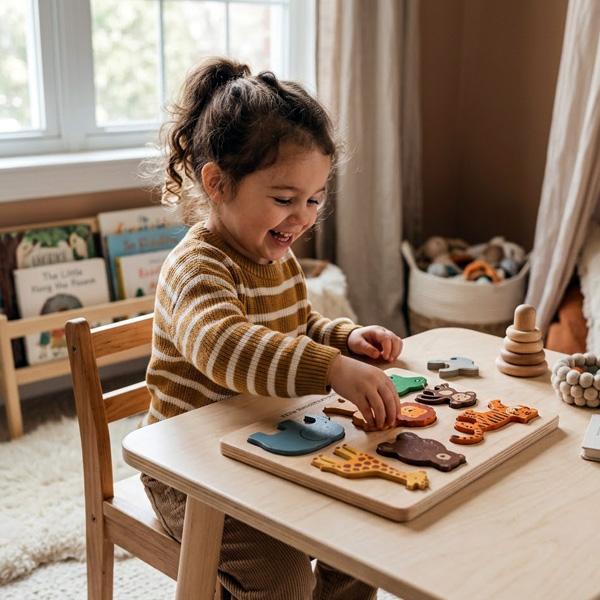
Language development grows rapidly at age three. Montessori alphabet toys help children build early literacy skills naturally through play and exploration.
Instead of memorizing letters through repetitive drills, Montessori methods encourage children to physically interact with letters and sounds.
Alphabet toys help children:
Recognize letters
Improve vocabulary
Strengthen pronunciation
Develop pre-reading skills
Build confidence with language
Children at this age enjoy touching, arranging, and exploring wooden letters. Sensory interaction helps improve memory retention and learning engagement.
Many Montessori teachers recommend introducing phonics naturally through playful learning activities rather than pressure-based instruction.

Three-year-olds are naturally curious about numbers, counting, patterns, and sorting. Montessori number toys introduce mathematical concepts in a hands-on and enjoyable way.
Instead of worksheets or screen-based learning, Montessori number toys allow children to physically explore numbers and quantities.
Children develop:
Counting skills
Number recognition
Pattern awareness
Logical thinking
Sequencing abilities
Fine motor coordination
Popular Montessori number toys include:
Wooden counting boards
Number puzzles
Stacking rings
Counting beads
Shape sorting games
Early math experiences help children build confidence and positive attitudes toward learning.
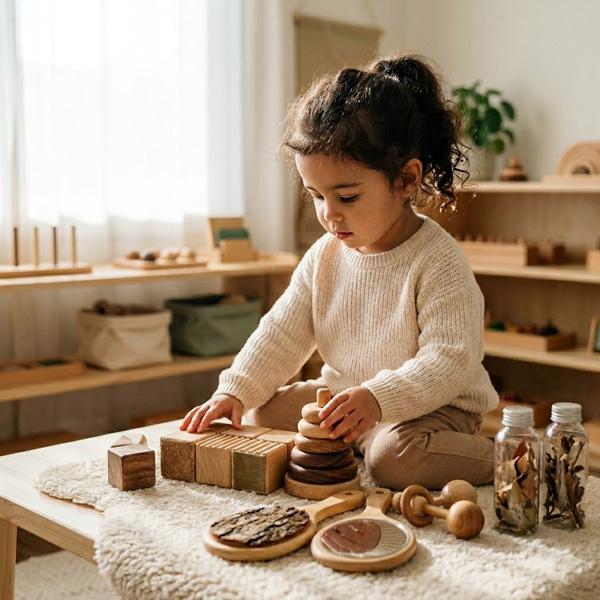
Sensory play is extremely important during early childhood because children learn through touch, movement, texture, sound, and visual exploration.
Montessori sensory toys help children process information and strengthen neural connections in the brain.
Sensory toys support:
Emotional regulation
Motor skill development
Focus and attention
Creativity
Sensory processing
Independent exploration
Examples of Montessori sensory toys include:
Textured wooden toys
Shape sorters
Stacking toys
Wooden sensory boards
Sorting trays
Unlike overstimulating plastic toys, Montessori sensory toys provide calming and meaningful sensory experiences.
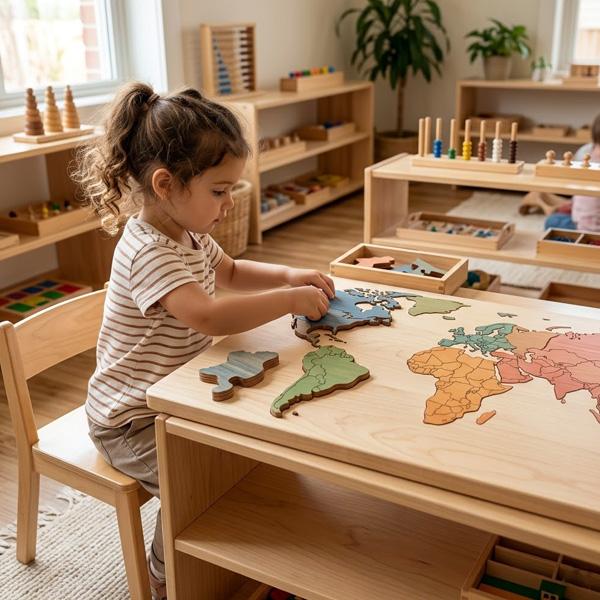
Map puzzles are one of the most valuable Montessori educational toys for expanding a child’s understanding of the world.
Children naturally become curious about countries, animals, cultures, and places. Montessori map puzzles introduce geography through hands-on learning and exploration.
Map puzzles help children develop:
Spatial awareness
Cultural understanding
Problem-solving skills
Memory retention
Fine motor coordination
Children also develop curiosity about different countries and environments, which supports lifelong learning.
Montessori teachers often use map puzzles to create interactive geography lessons for preschoolers.
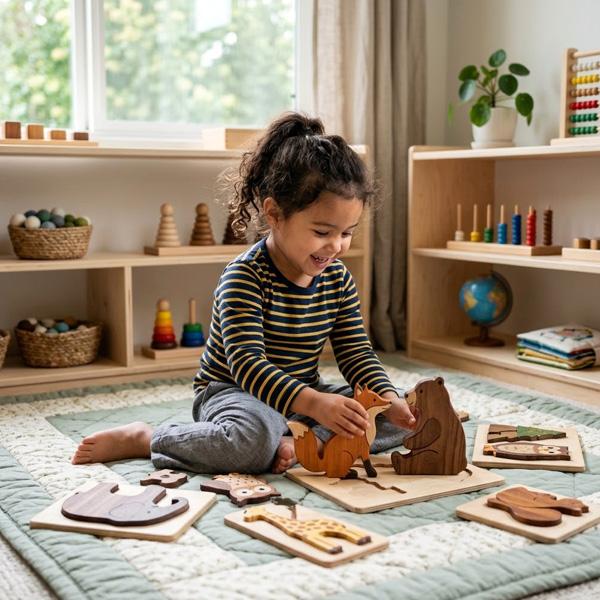
Animal puzzles are excellent Montessori toys because they combine education with imagination and storytelling.
Children love animals naturally, making these puzzles highly engaging for toddlers and preschoolers.
Animal puzzles help children learn:
Animal names
Habitats
Colors and shapes
Vocabulary development
Storytelling skills
Emotional connection with nature
Animal-themed educational toys also encourage pretend play and creativity.
Children may create jungle adventures, farm stories, or ocean exploration games while using simple wooden animal puzzles.
Modern children are surrounded by screens from an early age. While technology can be useful in moderation, excessive screen exposure may negatively impact attention span, sleep quality, creativity, and social development.
Montessori educational toys provide healthy screen-free alternatives that encourage active learning and meaningful interaction.
Children who engage in screen-free play often develop:
Better creativity
Stronger communication skills
Improved focus
Better emotional regulation
Healthier social interaction
Simple wooden toys allow children to use their imagination instead of relying on constant digital stimulation.
Parents and teachers increasingly choose Montessori educational toys because they support balanced and healthy childhood development.
If you are searching for meaningful gifts for toddlers, Montessori toys are one of the best choices. They combine fun, education, creativity, and long-term developmental benefits.
Perfect for early literacy learning and letter recognition.
Encourages creativity, storytelling, and vocabulary building.
Supports early mathematics and counting skills.
Introduces geography and spatial awareness.
Excellent for brain development and sensory exploration.
Unlike many plastic toys that lose excitement quickly, Montessori educational toys continue supporting learning for years.
When selecting Montessori toys for a 3-year-old, focus on quality, simplicity, and educational value.
Encourage independent learning
Are made from safe natural materials
Match the child’s developmental stage
Support creativity and imagination
Offer hands-on learning experiences
Avoid excessive noise and overstimulation
Handmade wooden toys are often the best option because they provide durability, safety, and sensory richness.
Parents should also rotate toys regularly to maintain curiosity and engagement.
Montessori educational toys provide far more than entertainment for 3-year-olds. They help children build confidence, creativity, concentration, problem-solving abilities, emotional intelligence, and lifelong learning skills.
Wooden puzzles, alphabet toys, sensory toys, map puzzles, and animal puzzles encourage children to actively engage with the world around them through hands-on exploration.
Unlike many plastic toys that rely on noise and instant stimulation, Montessori toys support calm, meaningful, and development-focused play experiences.
For parents, teachers, gift buyers, and Montessori families, choosing high-quality educational toys is an investment in a child’s future.
Jigbear we believe every child deserves joyful, safe, creative, and educational play experiences through thoughtfully designed handmade Montessori educational toys.
The best Montessori toys include wooden puzzles, alphabet toys, number learning toys, sensory toys, animal puzzles, and map puzzles.
Wooden Montessori toys encourage hands-on learning, creativity, sensory exploration, and independent thinking while reducing overstimulation.
Yes. Montessori educational toys support cognitive development, concentration, problem-solving, creativity, and fine motor skills.
Alphabet puzzles, number puzzles, counting toys, and wooden educational games are excellent for early literacy and math skills.
Screen-free toys encourage imagination, communication, focus, emotional development, and healthier learning experiences.
Yes. Montessori toys are durable, educational, eco-friendly, and designed to support long-term child development.
Montessori educational toys, Montessori toys for 3-year-olds, wooden Montessori toys, educational toys for toddlers, Montessori puzzles, alphabet toys for preschoolers, number learning toys, sensory toys for toddlers, map puzzles for kids, wooden educational puzzles, handmade Montessori toys, preschool learning toys, screen-free toys for kids, Montessori gift ideas
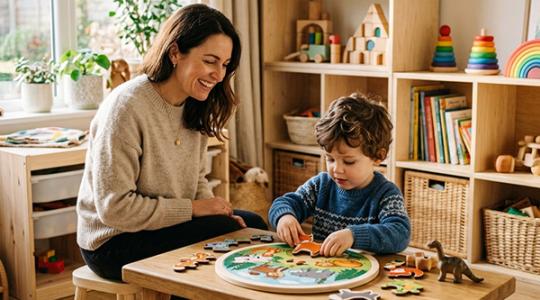
Discover how handmade educational toys help children build imagination, confidence, creativity, problem-solvin...
Discover how handmade educational toys help children build imagination, confidence, creativity, problem-solvin...
Jul 22, 2026
Cookie preferences