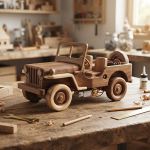
How to Make DIY Toys at Home for Kids Without Spending Much | Motorized Wooden Jeep
ago 09, 2026


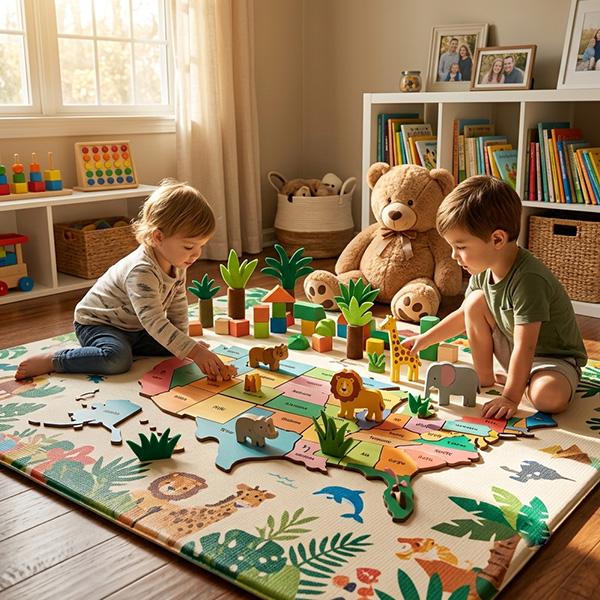
Not long ago, toy stores were dominated by brightly colored plastic toys with flashing lights, loud music, talking buttons, and endless batteries. These toys promised excitement, instant entertainment, and "educational" experiences—but many parents have started asking an important question:
Are these toys really helping children learn?
Across the United States and around the world, a quiet parenting revolution is taking place.
Families are replacing noisy electronic toys with beautifully crafted handmade educational toys made from natural wood. Montessori classrooms are embracing simple, open-ended learning materials. Preschool teachers are encouraging children to solve puzzles instead of staring at screens. Grandparents are choosing timeless wooden gifts instead of disposable plastic gadgets.
This movement isn't about nostalgia.
It's backed by growing awareness that children learn best when they actively explore, imagine, create, and discover—not when a toy does all the thinking for them.
We believe childhood should be filled with meaningful play. Every handmade wooden puzzle, alphabet puzzle, animal puzzle, and world map puzzle is designed to spark curiosity, build confidence, and inspire joyful learning through hands-on exploration.
In this comprehensive guide, you'll discover why handmade toys are becoming one of the smartest investments parents can make for their children's future—and how they help develop imagination, support learning, and encourage healthy screen-free play.
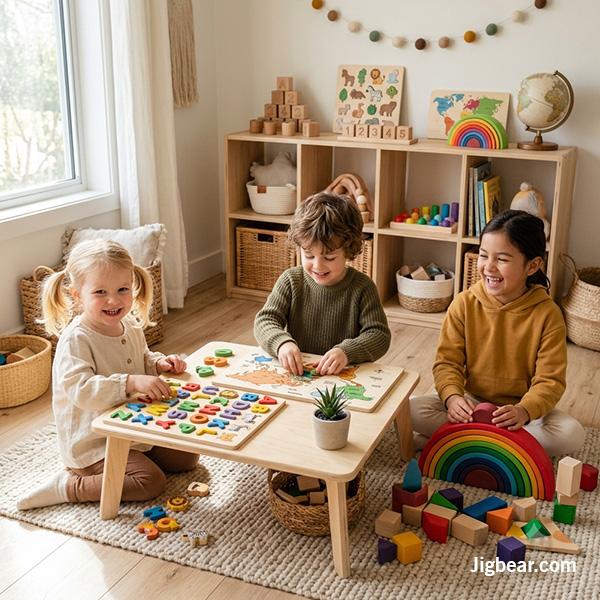
Today's children are growing up in a world unlike any previous generation.
Many toddlers interact with smartphones before they can speak in complete sentences. Tablets, televisions, video games, and streaming services compete constantly for their attention.
According to pediatric experts, excessive recreational screen time can reduce opportunities for:
This doesn't mean technology is inherently bad. Digital tools can certainly support education when used intentionally.
However, children also need experiences that engage all their senses.
They need to touch.
They need to build.
They need to experiment.
They need to make mistakes.
They need to imagine.
Handmade educational toys provide exactly those opportunities.
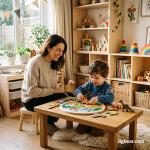
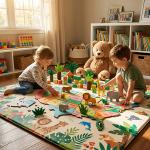
Unlike electronic toys that entertain children automatically, handmade toys invite children to become active creators of their own learning experiences.
Every puzzle piece becomes a challenge.
Every wooden animal becomes part of a story.
Every alphabet letter becomes the beginning of a new adventure.
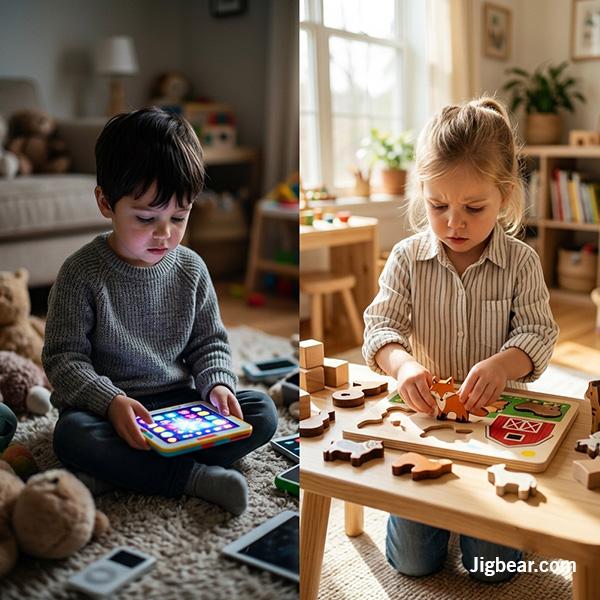
Imagine giving two children two different toys.
The first child receives a plastic electronic toy with flashing lights.
The toy sings.
The toy talks.
The toy presses its own buttons.
The child watches.
Now imagine another child receiving a handmade wooden world map puzzle.
There are no batteries.
No flashing lights.
No recorded voices.
Instead...
The child begins asking questions.
"Where does this piece belong?"
"What country is this?"
"Can elephants live here?"
"Where is Grandma's country?"
"What ocean is next to Africa?"
Suddenly, the toy isn't providing the entertainment.
The child is creating it.
That simple shift changes everything.
Instead of consuming information, children begin constructing knowledge through exploration.
Instead of following instructions, they begin asking questions.
Instead of watching, they start thinking.
This is the true power of handmade educational toys.
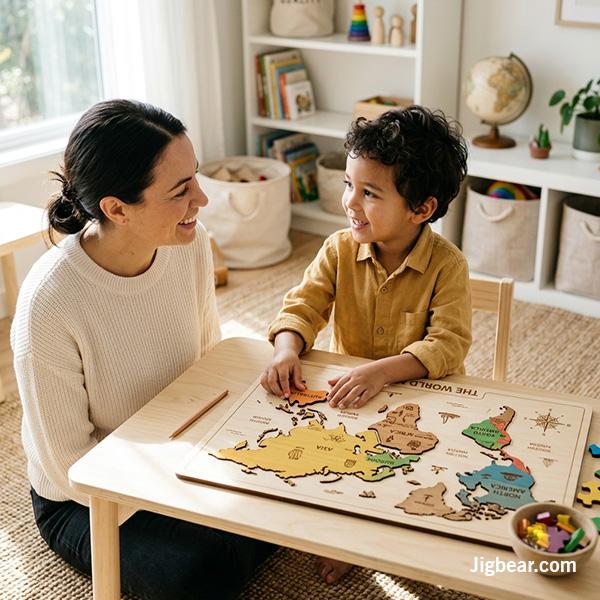
Every inventor...
Every scientist...
Every artist...
Every architect...
Every entrepreneur...
Started with imagination.
Imagination is not simply about pretending.
It is the foundation of innovation.
When children imagine stories, they practice creating possibilities.
When they build imaginary worlds, they learn problem-solving.
When they invent characters, they strengthen language skills.
When they experiment with ideas, they develop flexible thinking.
Handmade toys naturally encourage this process because they don't dictate exactly how children should play.
A wooden animal puzzle can become:
The possibilities are endless because the child becomes the storyteller.
Electronic toys rarely provide this level of creative freedom.
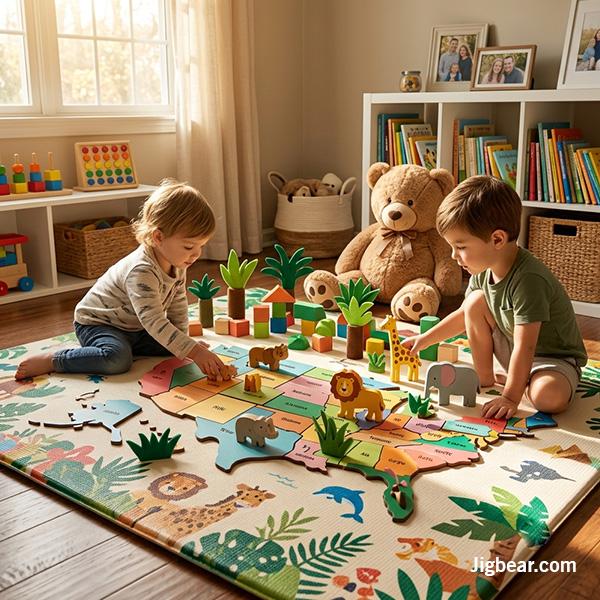
Modern parents often hear the phrase "screen-free play."
But what does it actually mean?
Screen-free play simply means giving children opportunities to learn, imagine, create, and interact without relying on digital devices.
Research and classroom experience consistently show that screen-free activities help children develop:
Handmade educational toys naturally support these outcomes because they require children to participate actively rather than watch passively.
Instead of receiving instant rewards from a screen, children experience something far more valuable:
The satisfaction of solving a challenge themselves.
That feeling builds confidence that lasts far beyond childhood.
Discover how handmade educational toys help children build imagination, confidence, creativity, problem-solvin...
Discover the hidden benefits of eco-friendly handmade toys for kids. Learn how wooden puzzles and educational...
lug 22, 2026
Cookie preferences